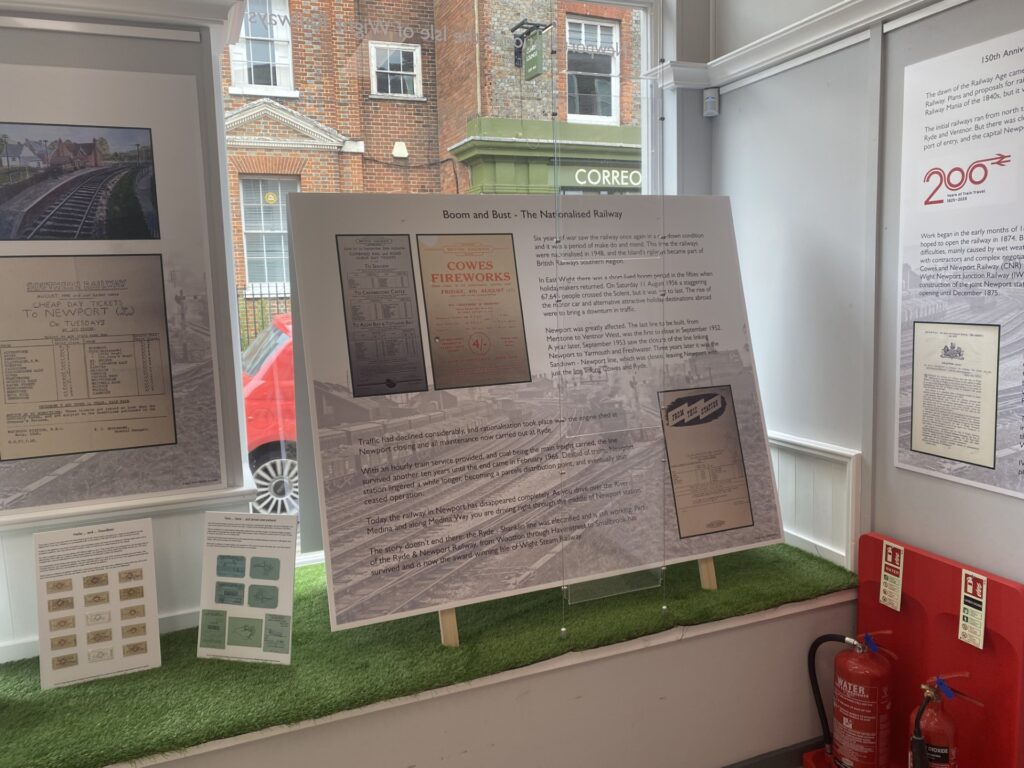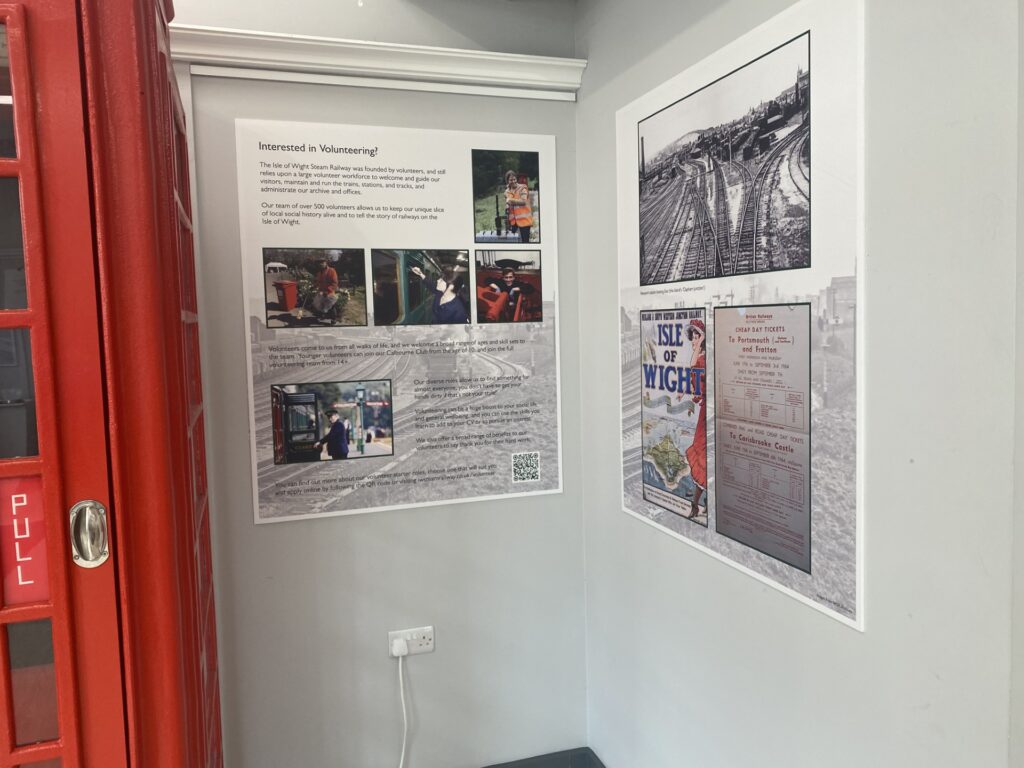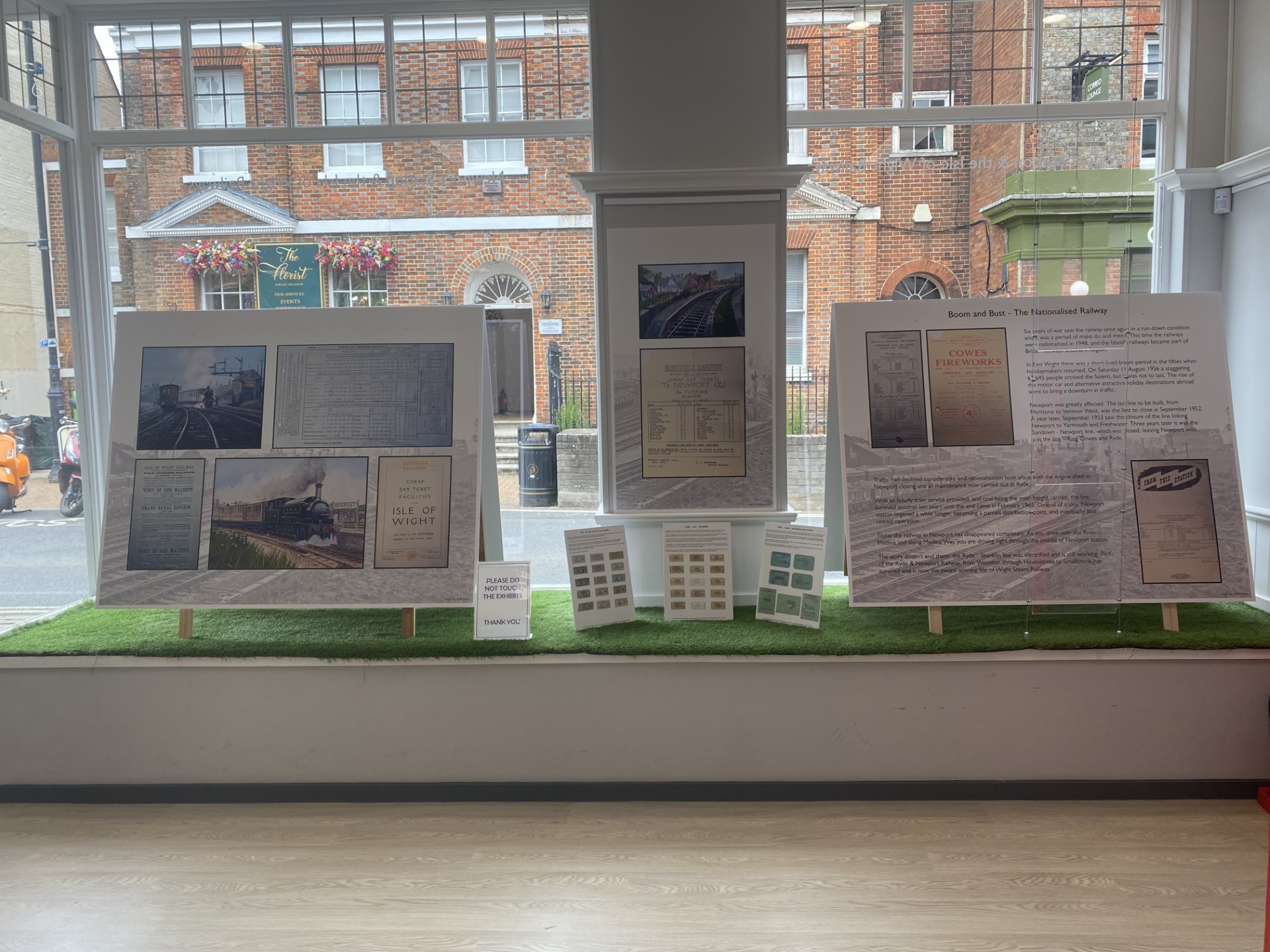
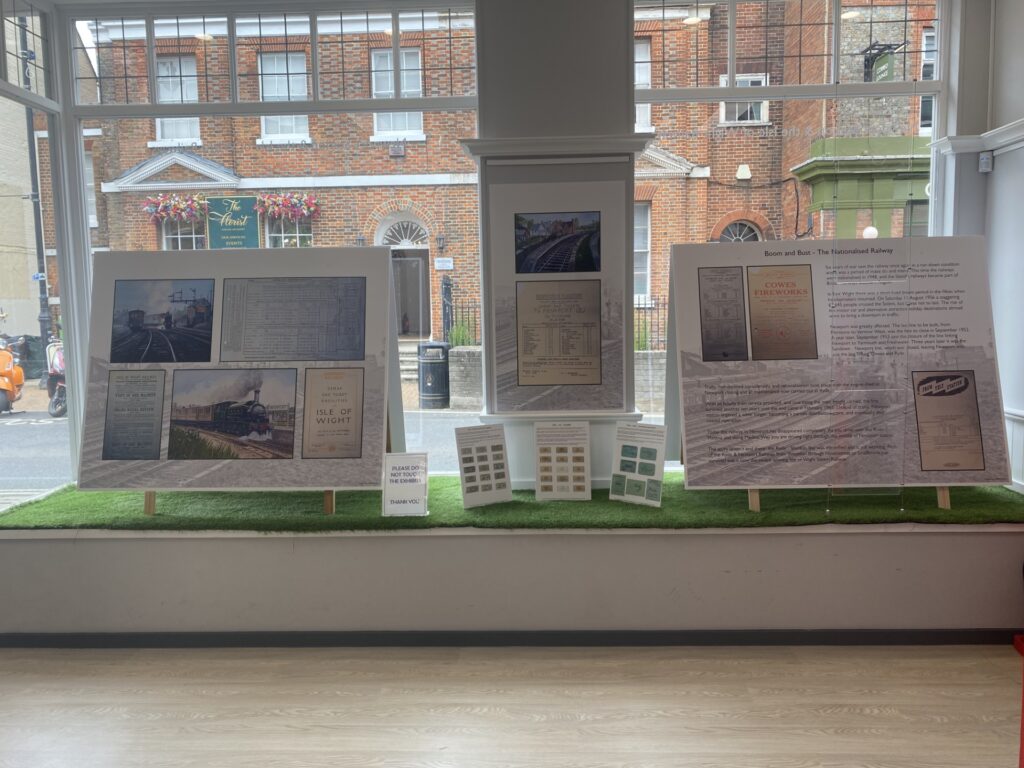
Isle of Wight Steam Railway has launched an exhibition on the story of Newport Station in the Newport and Carisbrooke Community Centre. The exhibition is now open and runs through to November 2025 at Newport & Carisbrooke Community Council’s Community Hub 64 High Street, Newport, PO30 1BA.
Newport station was the hub of the Island’s railway system of some 55 miles in its heyday. The exhibition initially documents the station from the first opening of Island railways in the 1860s to the early 1920s when there were a number of separate railway companies. Then came the Grouping when these companies were absorbed into the newly formed Southern Railway in 1923. The Southern made a considerable investment in the Island network before World War II. The final phase of the story is the British Rail era from 1948 which saw a gradual decline in traffic until by 1967 all that was left was the electrified line from Ryde Pierhead to Shanklin. Then in the 1970s the IWSR (formerly The Wight Locomotive Society), based at Havenstreet, gradually re-opened the line from Wootton to Smallbrook Junction, the interchange with Island Line.
By Island standards Newport Station was impressively large and in contempoary photos it looks like a mini-Clapham Junction. To-day nothing of the station remains. It was obliterated during the rebuilding of that part of Newport in the1970s onwards. Most people driving along the current dual carriageway (the so-called ‘motorway’)
are unaware that they are passing through the old station layout.
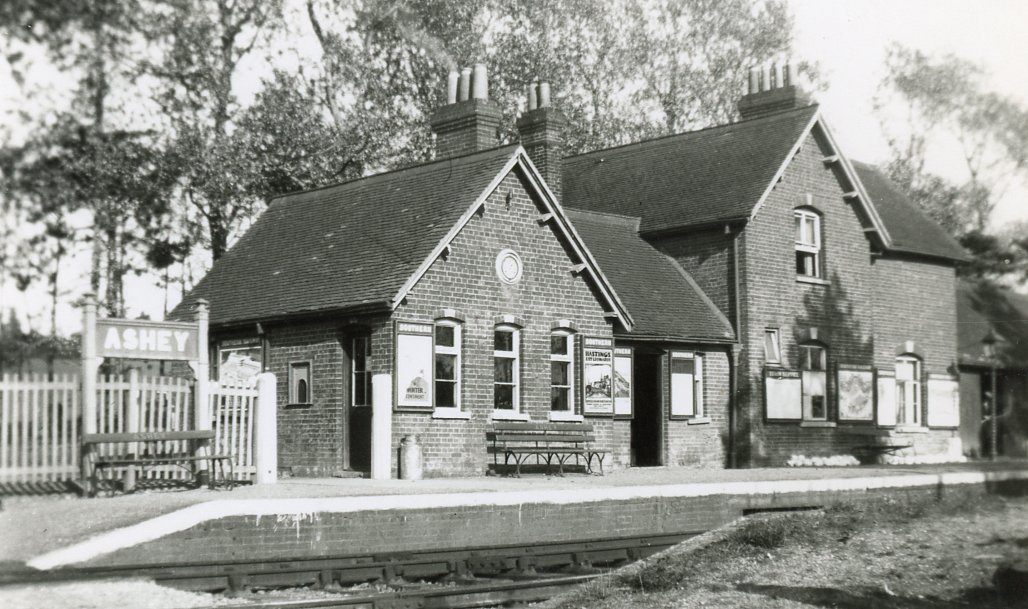
The exhibition is illustrated by images from the IWSR photographic archive, copies of paintings, archive material and tickets, as well as a small collection railway related artefacts.
The exhibition curators hope it will give visitors a clearer idea of how Newport station fitted in to the layout of the town as well as a better understanding of the economic and social importance of Island railways over 100 years.
Also celebrated in the exhibition are the opening of the Ryde and Newport Railway 150 years ago in December 1875 and the national celebration ‘Rail 200 – 200 years of railway travel since 1825’.